
On This Page
- What Is Magento 2 AI Integration?
- Why Generative AI in Ecommerce Matters Right Now
- Where AI Automation for Ecommerce Helps the Most -
- Magento 2 Automation Beyond the Store Pages -
- Magento 2 ChatGPT Extension: A Simple Way to Start
- How to Plan Your Magento 2 AI Integration (Step by Step)
- Do You Need Magento Ecommerce Development Services?
- Common Mistakes to Avoid
- Final Thoughts
- Frequently Asked Questions
Get in Touch
Running a Magento store is a lot of work. Product pages, orders, customer questions, search, reports. It never really stops.
Here’s the good news. A lot of that work can now be handled by AI. And no, you don’t need a huge budget or a team of data scientists to start.
Let’s talk about how Magento 2 AI integration actually works, what it can do for your store, and where to begin.
What Is Magento 2 AI Integration?
Simple version: you connect an AI tool to your Magento 2 store, and it takes over the boring, repeated tasks.
Writing product descriptions. Sorting orders. Helping shoppers find things. That kind of stuff.
Most of these tools use something called NLP, short for natural language processing. It just means the AI can read and write like a person. So when you ask it to write a product description, it doesn’t spit out robotic text. It sounds fairly natural, and you can edit it however you like.
That’s the whole idea behind generative AI in ecommerce. It creates things for you, instead of just sorting data.
Why Generative AI in Ecommerce Matters Right Now
Think about your last busy sale season. Orders piled up, new products needed pages, and customers kept asking the same five questions.
Now picture half of that handled in the background.
That’s what AI for ecommerce business is really about. Not replacing your team. Just giving them time back. Your people can focus on strategy, customers and growth, while the AI handles the repetitive work.
And if you’re comparing options, a good Magento 2 development services partner can help you figure out what to automate first, so you don’t waste money on tools you don’t need.
Where AI Automation for Ecommerce Helps the Most
You don’t have to automate everything. Start where it hurts.
Automated Product Descriptions
This is the easiest win. Honestly.
If you’ve ever had 500 new products and one tired content writer, you know the pain. Automated product descriptions fix that. You feed the AI a few product details like name, material, size and use. It writes a short and a long description for you.
You still review it. You tweak the tone. But the first draft is done in seconds, not hours.
AI can also help with meta titles and meta descriptions, which means better SEO without the extra typing.
AI-Driven Product Management
Managing a big catalog is messy. Categories get outdated. Attributes go missing. Some products have great content, others have almost nothing.
AI-driven product management helps you spot those gaps and fill them faster. It can suggest content for thin pages, help organize attributes, and keep your catalog more consistent. Small thing, big payoff over time.
Automated Order Processing
Orders are where mistakes happen. A wrong address here, a missed status update there.
With automated order processing, the routine steps run on their own. Order confirmations, status updates, flagging orders that need a second look. Your team only steps in when something odd comes up.
It’s not magic. It’s just fewer clicks for everyone.
AI-Powered Search for Ecommerce
Ever typed something into a store search bar and got zero results, even though the product was right there?
Annoying. And it costs sales.
AI-powered search for ecommerce understands what shoppers mean, not just the exact words they type. Someone searches “comfy shoes for standing all day,” and the search still shows the right products. That’s NLP doing its job.
Better search means happier shoppers. Happier shoppers usually buy more.
Magento 2 Automation Beyond the Store Pages
AI isn’t only about product pages. It can quietly help in other places too.
Ecommerce Marketing Automation
Think email subject lines, product highlights, campaign copy, and category page text. Ecommerce marketing automation with AI helps you create these faster and keep the voice steady across channels.
You still decide what goes out. The AI just gets you to the first draft quicker.
Ecommerce Workflow Automation and Process Automation
Every store has a few tasks that eat time every single week. Updating content in bulk. Checking catalog quality. Handling repeat support questions.
That’s where ecommerce workflow automation and ecommerce process automation come in. List out the tasks your team repeats most. Then pick one or two to automate. Don’t try to do it all at once. That’s how projects stall.
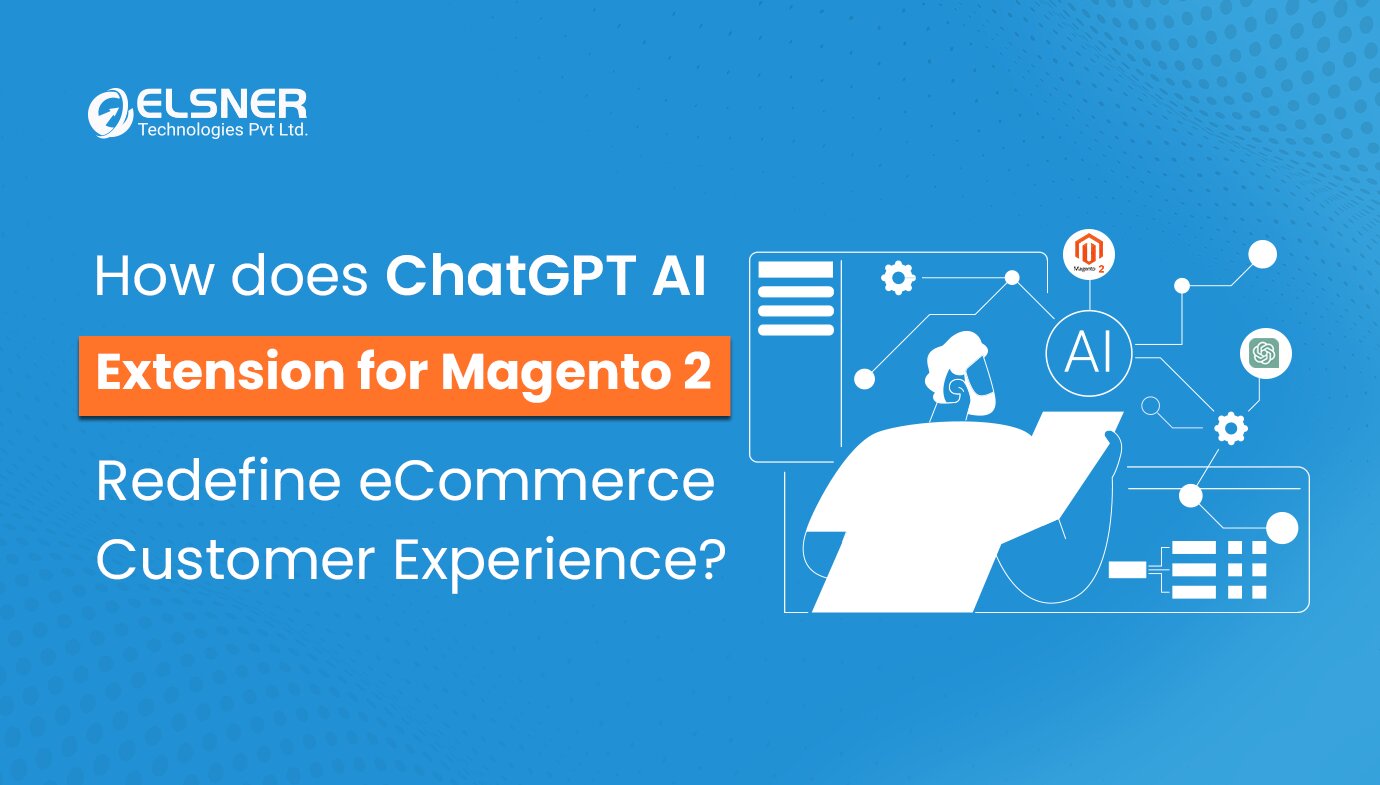
Magento 2 ChatGPT Extension: A Simple Way to Start
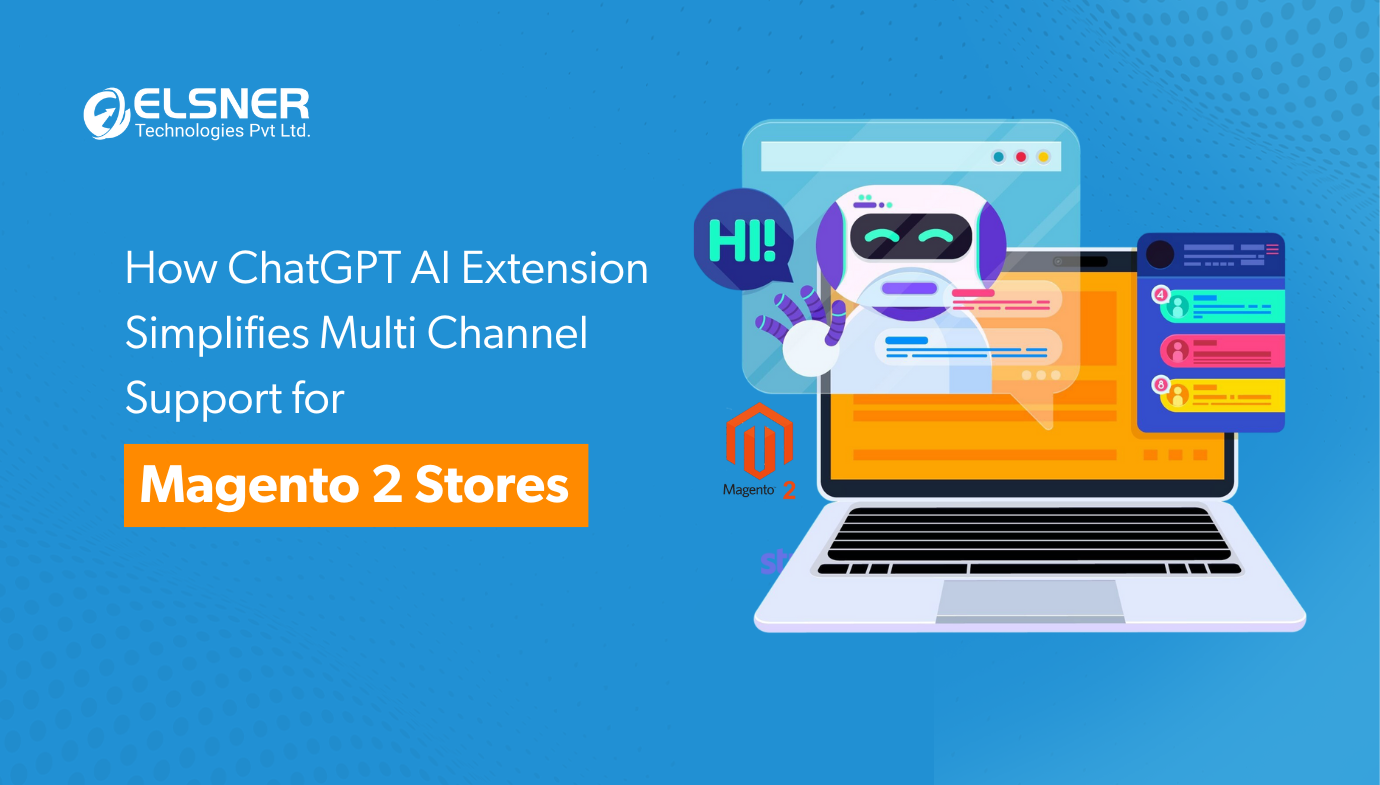
If you want a practical starting point, a Magento 2 ChatGPT extension is probably the easiest one.
Why? Because you don’t need a custom build. You install it, connect it, and start generating content right from your admin panel.
Elsner’s Magento 2 ChatGPT AI extension is made for exactly this. It helps store admins create product and category content automatically. Here’s what it covers:
-
Long and short product descriptions
-
Meta titles and meta descriptions for SEO
-
Bulk upload and bulk updates for large catalogs
-
Support for multiple product attributes, so the content feels specific
-
Works with the Magento 2 page builder
That bulk option is a big deal if you’ve got hundreds or thousands of products. Nobody wants to write those one by one.
One tip, though. Always read what the AI writes before you publish. Fix facts, adjust the tone, add your brand’s personality. AI gives you a strong draft. You make it yours.
How to Plan Your Magento 2 AI Integration (Step by Step)
Here’s a simple way to approach it. No fancy planning needed.
Pick One Problem First
Ask yourself: what task wastes the most time on my team? Product descriptions? Support replies? Search? Start with that single thing.
Choose the Right Tool
Look for something that fits your Magento 2 version and works inside your existing setup. Browse through the top Magento 2 extensions for ecommerce stores if you want to compare what’s out there.
Test on a Small Batch
Don’t roll it out across the whole catalog on day one. Try 20 or 30 products. Check the results. Then scale up.
Keep a Human in the Loop
Always. AI makes mistakes sometimes, and your customers will notice if a description says something wrong about a product.
Measure What Changes
Track time saved, page quality, search rankings and conversions. If something’s working, do more of it. If not, adjust.
Do You Need Magento Ecommerce Development Services?
Maybe. Maybe not.
If you only want to generate content, a ready-made extension is usually enough. But if you want AI connected deeper into your orders, search, or catalog systems, you may need custom work.
That’s where Magento ecommerce development services can help. A good team can look at your store, tell you what’s worth automating, and connect everything without breaking what already works.
Common Mistakes to Avoid
A few things trip people up again and again.
Publishing AI content without reading it. Automating too many things at once. Ignoring SEO basics like unique titles and descriptions. Expecting perfect results on day one.
And one more. Forgetting that your customers want to feel like they’re dealing with a real brand, not a robot. Keep your voice in there.
Final Thoughts
AI isn’t some far-off future thing for Magento stores. It’s already here, and it’s pretty practical.
Start small. Maybe with automated product descriptions or a simple Magento 2 ChatGPT extension. See how it feels. Then grow from there into search, order handling and marketing.
Your store gets faster. Your team gets breathing room. And you get to spend your time on the stuff that actually grows the business.
Frequently Asked Questions

Harshal Shah
Harshal Shah is the Founder and CEO of Elsner Technologies, a leading global IT and eCommerce development company. With over two decades of experience in the industry, Harshal has spearheaded innovative projects, particularly in Magento and WordPress development. His entrepreneurial spirit and technical expertise have positioned Elsner as a top solution provider for businesses seeking cutting-edge digital transformation.